



Original Grease film posters were produced to advertise a particular cinema release in a specific country. A later print may carry the same familiar artwork, but that does not make it the same type of collectable.
Table of Contents
- What Counts as an Original Grease Film Poster
- Dating Grease Posters Through the UK Release Timeline
- Why the 1978 UK Cinema Boom Still Shapes Collector Interest
- Reading Condition, Restoration and Real Sale Evidence
- Choosing, Displaying and Protecting Your Grease Poster
- Grease Film Poster Questions Answered
What Counts as an Original Grease Film Poster
It helps to think of a first-edition book beside a modern paperback. The story may be identical, but the circumstances in which each copy was printed make them very different objects to collect.
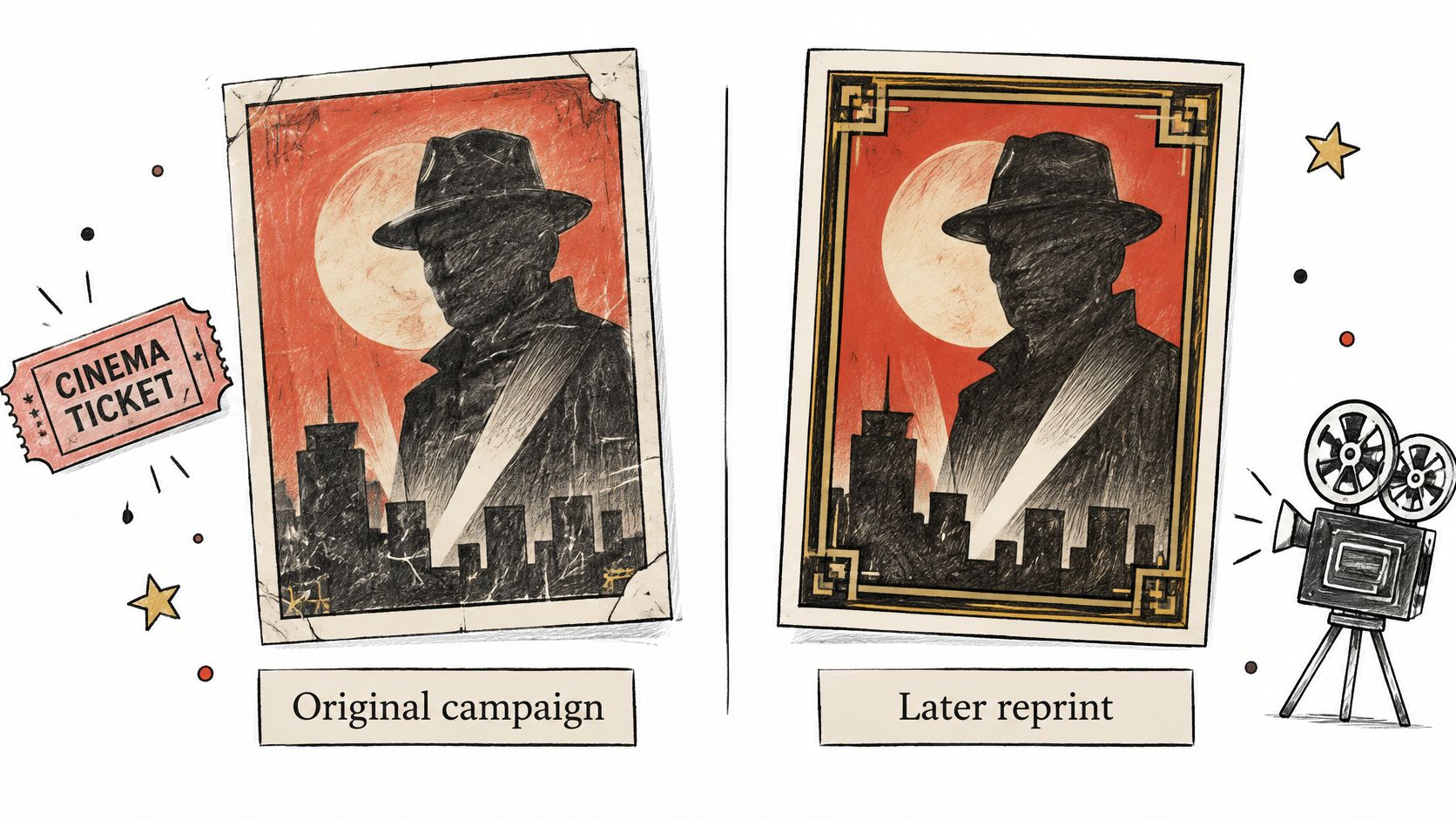
For film posters, the real difference is purpose. An original formed part of the campaign used to promote the film in cinemas; a reproduction was printed afterwards so the artwork could be sold for display.
A poster is defined by its place in a cinema campaign, not simply by the image it shows.
Original Cinema Poster Versus Later Reproduction
The table below gives a quick way of separating period cinema material from a newer decorative copy.
| Attribute | Period-Original Cinema Poster | Modern Reproduction |
|---|---|---|
| Purpose | Advertised a theatrical release | Reproduces artwork for decoration |
| Printing Context | Produced for a particular country and campaign | Printed separately for retail sale |
| Dating Evidence | Campaign details should be examined | The film’s date alone proves very little |
| Typical Markings | Credits and distributor information need inspection | May imitate those same details |
| Buying Meaning | Cinema memorabilia | Decorative print |
These distinctions matter because a convincing reprint can look like the genuine article at first glance. Checking the poster’s background is what reveals whether it was made for a cinema or simply made to resemble one.
Ask Four Questions Before Choosing
Once that basic difference is clear, each listing should answer four practical questions. Think of these as the main checks to carry through the rest of the guide.
- Which country? Identify the market the poster was printed to serve.
- Which release campaign? Distinguish first-release material from later cinema campaigns.
- Which format? Ask for the proper format name along with its actual dimensions.
- What condition? Look for clear details about folds, tears, repairs and restoration.
Matching artwork does not necessarily mean matching editions. If two listings appear to show the same design, ask each seller to explain which campaign the poster belongs to and provide photographs that support that description.
This approach allows gift buyers to judge a poster sensibly without needing years of specialist knowledge. More experienced collectors can use the same points to decide whether a particular edition deserves a place in their collection.
By the end of the guide, you should feel more confident assessing identity, suitability and condition. Famous Movie Posters only sells guaranteed original movie posters, and its guide to original movie posters in the UK is a useful place to begin before applying these four questions to your own shortlist.
Dating Grease film posters starts with the British cinema calendar, not the age suggested by a photograph. Establish the campaign first, then ask whether the printed details support it.
Dating Grease Posters Through the UK Release Timeline
The first fixed point is 13 June 1978, when the BBFC classified Grease with an A certificate. C.I.C. is listed as the UK cinema distributor, while the BFI records the British release as 14 September 1978.
Those details give the first British campaign a firm historical watermark. They set the scene, although a survivor still has to prove it was printed for that run rather than simply carrying the right year.
Release dates beat seller adjectives. “Vintage”, “classic” and “rare” cannot establish which cinema campaign produced a poster.
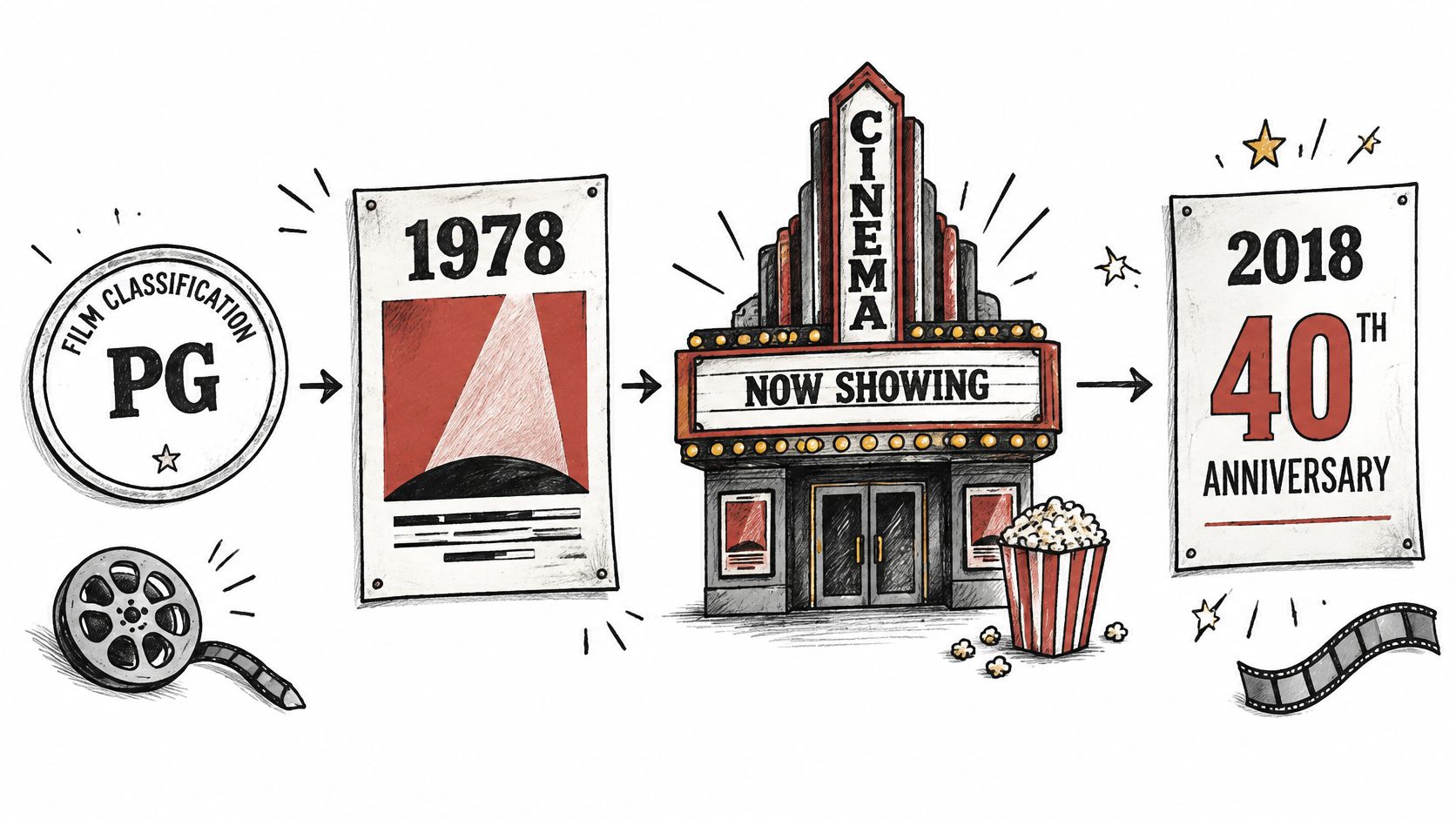
Think of the timeline as a railway timetable. It tells you which departure you are investigating; the poster’s credits and wording help show whether the object belongs on that service.
Separate the Anniversary Campaign
The next distinct milestone is 19 April 2018, the UK 40th-anniversary re-release. That campaign belongs to a different collecting era, even when its imagery recalls the original film.
Its job in the foyer was different too. The first campaign sold a new cinema release, while anniversary material asked audiences to revisit a favourite or finally catch it on the big screen.
| Campaign | UK Date | Advertising Purpose |
|---|---|---|
| First Release | 14 September 1978 | Promote the original British cinema opening |
| 40th Anniversary | 19 April 2018 | Promote a celebratory cinema return |
A genuine anniversary cinema poster should be described as anniversary material, rather than quietly folded into a listing for the first release. Familiar faces and a prominent “1978” do not date the paper by themselves.
If a listing says “original 1978” yet the artwork announces forty years of Grease, ask the seller to reconcile those descriptions before considering a purchase.
Check the Printed Evidence
Work from the small print towards the overall design. Ask for uncropped photographs rather than relying on a framed room shot.
- Distributor credit. Compare the printed wording with the claimed British campaign, including the C.I.C. connection.
- Certificate references. Check whether the description acknowledges the original A classification rather than assuming today’s classification applies.
- Country wording. Ask what establishes the UK market.
- Campaign styling. Look for anniversary language or dates identifying a later release.
- When the details agree, keep the campaign identification alongside the listing photographs.
- When they conflict, request an explanation rather than guessing from colour or apparent wear.
Before buying, ask the seller to confirm the campaign in writing and supply readable photographs of its identifying details. You can then approach format and condition with the era established.
Grease was never just another title on Britain's cinema listings in September 1978. It was an event release, the sort of film that everyone seemed to be talking about, and its advertising became bound up with that shared cultural moment.
Why the 1978 UK Cinema Boom Still Shapes Collector Interest
The British opening on 14 September 1978 is where the story begins for anyone wondering why collectors still hunt Grease film posters today. Picture a nationwide concert tour: the cinema posters are simply the paperwork that survived, rather than souvenirs printed after the fact.
That comparison explains the appeal nicely, though it promises nothing about money. A poster can put its owner in touch with the buzz of the original campaign, yet the film's popularity on its own tells you nothing about what an individual sheet is worth.
Cultural weight doesn't equal monetary value. A successful release explains the interest, not the price of every surviving poster.
The reported takings do convey some of that excitement, so long as you keep different kinds of evidence apart. Contemporary reporting described a record £2.2 million opening across the first eight days, with a reported £14.7 million total to follow.
Read the Box Office Figures Carefully
Modern database entries paint a rather different picture, and they shouldn't be treated as interchangeable accounts of the original British run.
| Database | Reported UK Figures |
|---|---|
| The Numbers | 18 maximum screens, 25 theatrical engagements, roughly $811,925 gross |
| Box Office Mojo | Three releases, about $808,034 lifetime gross |
The databases use different reporting methods and currency conventions. Sitting their dollar totals next to contemporary sterling reports, as though every figure measured exactly the same thing, simply doesn't work.
For collectors, the distinction that matters is between the release's historical impact and the scope of a particular database entry. Take the 18 maximum screens figure: it shouldn't be stretched into a claim that the entire British phenomenon played in only eighteen cinemas.
- Keep the labels attached. "Lifetime", "engagements" and "opening" all describe different measures.
- Keep currencies visible. Never quietly convert reported dollars into pounds.
- Avoid invented conclusions. Box office totals can't reveal poster print runs or survival rates.
Turn Cultural Interest Into a Better Choice
Back to that concert comparison: a huge crowd doesn't make every surviving programme equally desirable. The appeal of Grease gives you a reason to investigate a poster, nothing more. It isn't a shortcut around identifying the thing.
Before shortlisting an example, ask the seller to confirm its country, campaign and format. Then weigh up the physical options, particularly British Quads and American One Sheets, and choose the object that suits both your collection and your wall.
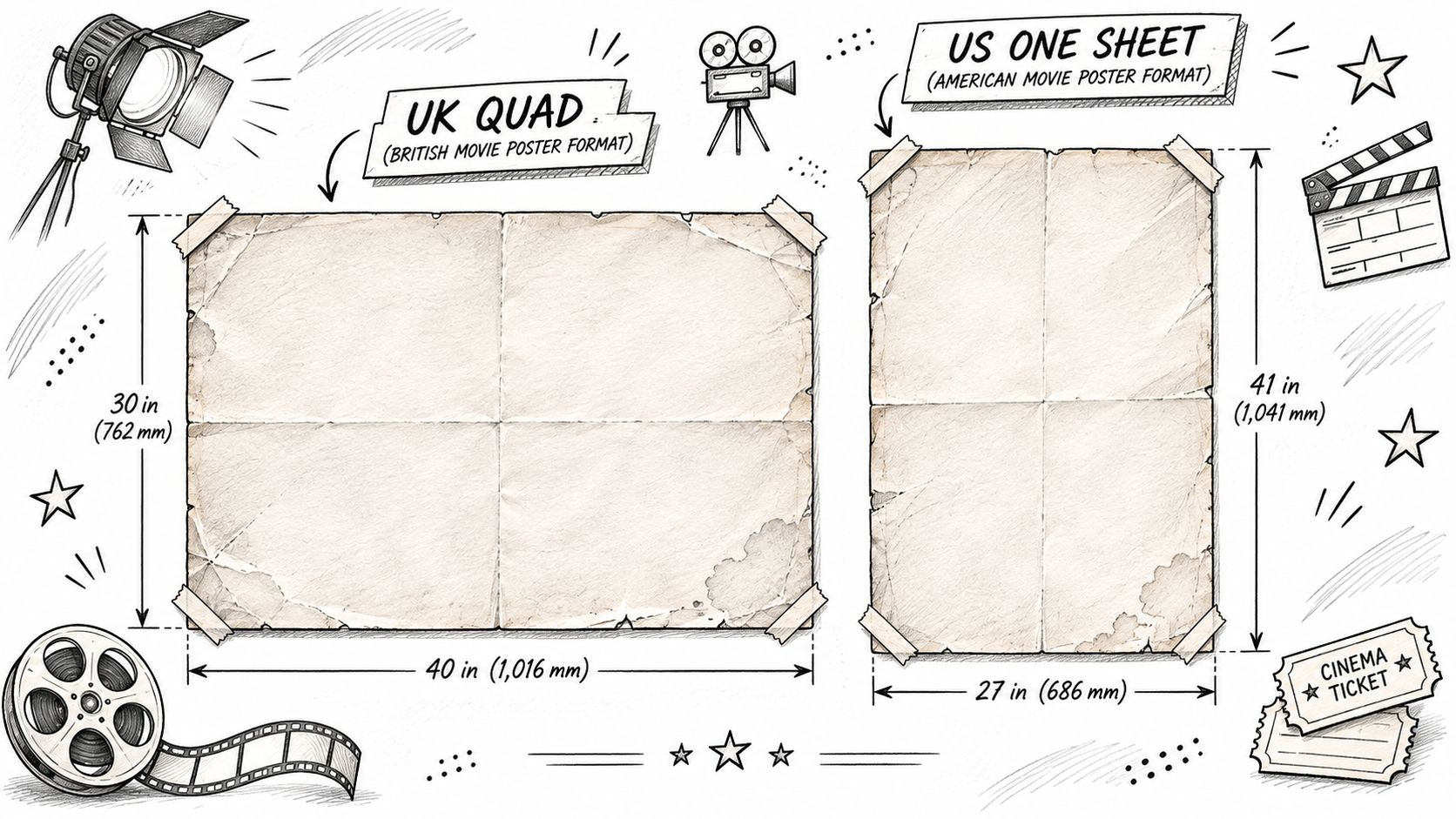
Format is the point where most buyers get tripped up, so it deserves a proper look. A UK Quad and a US One Sheet aren't the same poster at different sizes. They're entirely separate objects, printed for different advertising systems in different countries.
A decent comparison is clothing sizes. A British medium and an American medium share the same label, yet each was cut for a different market. Poster formats behave the same way: the name tells you which national campaign the piece was produced for, not just how big it is.
Orientation Changes Everything
The most obvious distinction is which way the paper runs. The British Quad is landscape. The American One Sheet is portrait.
That one fact drives nearly every practical choice that follows. A landscape Quad sits comfortably across a wide wall above a sofa. A portrait One Sheet belongs in a narrower gap, beside a doorway or tucked between shelves.
Orientation also changes how the artwork reads from across a room. Landscape layouts pull your eye sideways through the cast line-up. Portrait designs stack the imagery vertically, so faces and title lettering land differently at a distance.
Country and format travel together. A Quad comes out of the British campaign system, a One Sheet out of the American one, and neither is just a resized copy of the other.
Grease Poster Formats at a Glance
Before getting into the detail, it helps to see the two main Grease formats side by side. The table below covers where each came from, what job it did in the cinema campaign, and what that means when you're choosing one for your wall.
| Format | Market of Origin | Orientation | Campaign Role | Display and Framing Notes |
|---|---|---|---|---|
| UK Quad | United Kingdom | Landscape | British foyer and exterior display | Suits wide walls; needs a landscape frame — ask whether the listing is the British campaign version |
| US One Sheet | United States | Portrait | American cinema display | Suits narrow spaces; portrait framing — check which size era the poster dates from |
The takeaway is simple enough: figure out which wall you're filling first, then buy the format that fits it. For anyone weighing up Grease poster formats against actual frame sizes and personalised framing options, this framing advice from Striped Circle is a handy companion read, and our own guide on the difference between a One Sheet and a Quad goes deeper on the history of both.
Why Format Literacy Pays Off
Knowing your formats does more than help you decode a listing title. It turns browsing into a deliberate hunt rather than a lucky dip.
At Famous Movie Posters we stock one-sheets, UK quads and many other formats, covering modern releases right back to classics from the 1930s and 1940s. That range means you can work through the catalogue by decade, genre or franchise with a clear picture of how each format will actually look once it's framed and how the colours will sit in a typical British living room.
So before a listing tempts you, ask yourself one thing: which country's advertising system was this poster cut for? Answer that, and the conversations about condition and price get a whole lot easier.
A British auction listing for a Grease (1978) Original UK Quad Poster recorded £35. Treat that as one datapoint: a single hammer price can hint at demand, but it cannot price another copy until identity, condition and sale circumstances are compared.
Reading Condition, Restoration and Real Sale Evidence
Think of Grease film posters a bit like classic cars: same badge, wildly different histories. Repairs, storage and honest description can separate two examples that look alike in a thumbnail.
A clean image should never stand in for questions about provenance, print quality and whether the piece is genuinely period-original. Compare like-for-like campaigns before comparing money, because Quad posters are not automatically interchangeable.
Buy the documented object over the reassuring adjective. “Excellent” still needs photographs and an explanation.
For wider context, read our guide to original movie poster prices. If you are weighing a room budget alongside it, villa interior cost estimates is an interiors reference rather than evidence for collectable poster values.
Read Beyond the Condition Grade
A useful note names faults and treatments one by one. When a listing says “minor wear”, ask where it sits and whether it touches faces, lettering or the paper around them.
Linen backing and restoration need their own questions. Backing can stabilise a poster without proving the paper is untouched, and a tidy surface can hide how much repair sits underneath.
| Detail | What to Clarify |
|---|---|
| Fold lines | Are there splits or losses at intersections? |
| Tears | Where are they, and have they been repaired? |
| Restoration | What areas received repair or retouching? |
| Printing quality | Can you inspect sharp lettering and credits? |
Take “folded with small tears” as a starting point. Ask for tear lengths, locations and close photographs, then decide whether those faults fit your own standards and whether the overall colour and finish will suit your home.
- Request complete photographs of the front and accessible reverse, without cropping.
- Ask for close-ups of corners, edges, fold intersections, credits and every disclosed repair.
- Avoid unnecessary handling if the seller cannot safely expose the reverse.
Confirm the Campaign Before Paying
Separate a 1978 first-release Quad from later re-release artwork, including the April 2018 anniversary campaign. Cinema material from that later run can be genuine and still carry different collector weight from first-release material.
Send these questions before committing:
- Which release campaign produced this copy?
- What evidence supports its date and provenance?
- Is it backed, restored or retouched?
- Can you confirm those details in writing?
Famous Movie Posters sells only guaranteed originals, which removes a fair amount of counterfeit risk. Before paying for a shortlisted Grease poster, ask for condition photographs and campaign confirmation, then judge the price against genuinely comparable examples rather than that isolated auction result.
Choose Grease film posters with the room in mind as much as the collection. The right buy should feed your love of the film, not leave you hunting for a wall that can take it.
Choosing, Displaying and Protecting Your Grease Poster
- Start with the era. Decide whether you want the 1978 first release or the 2018 anniversary campaign, based on the cinema moment you want to own.
- Match the country and format to the wall. Measure the space before you shortlist an edition.
- Be honest about condition. Work out whether folds or disclosed repairs would niggle you once it is hanging opposite your seat.
For gifts, that last point matters most. A collector who likes age may enjoy a bit of visible history, while someone styling a clean cinema room may want fewer battle scars. A personalised note about why you chose that campaign often means more than a generic gift receipt.
Pick the poster you’ll enjoy seeing every day; age alone should never be the deciding factor.
Treat the frame as part of the budget from the outset. Famous Movie Posters offers framing guidance and a dedicated frames collection, so ask what suits the poster before ordering rather than assuming any frame will do.
Plan the Display and Storage
A landscape Quad sits naturally above a sofa on a wide wall. A portrait One Sheet is easier to place in a narrower gap beside the cinema entrance; mark the proposed frame outline with paper before committing.
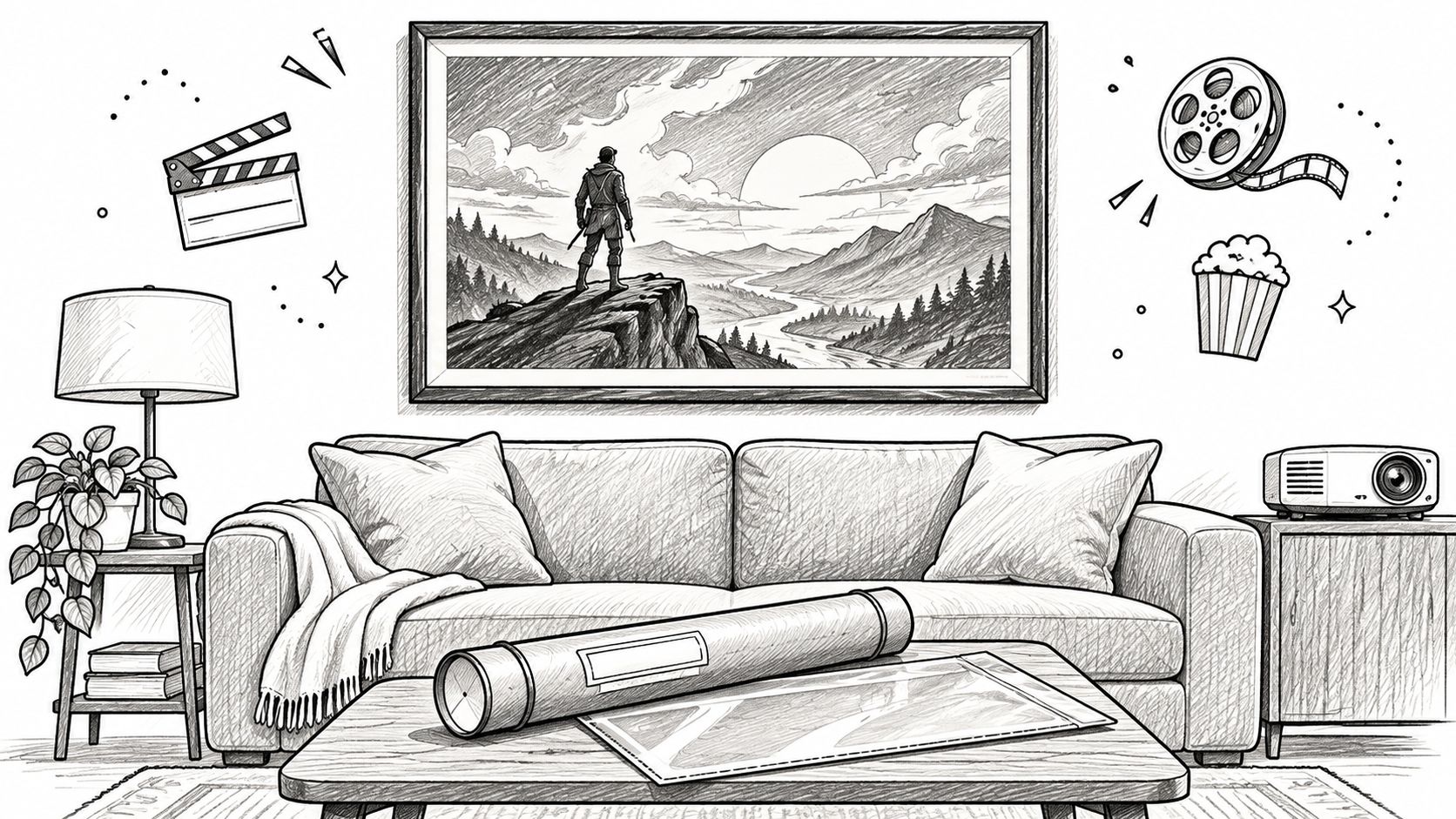
For anything waiting to go up, the retailer’s stated storage standards give you sensible questions to ask about materials:
- Archival boxes are PAT-tested flat file boxes with a 3% calcium carbonate buffer.
- Premium items receive protection in acid-free polyester pockets.
- Shipping protection uses custom-made tubes matched to One Sheet and Quad sizes, with acid-free tissue and kraft paper.
These are separate jobs. Think of it like vinyl: the sleeve protects the record on the shelf, the stiff mailer gets it home. A shipping tube is for transit; if the poster will not go straight on the wall, talk through storage and framing as their own decisions.
Free UK shipping and worldwide delivery also help buyers at home and abroad. If the edition you want is not listed, use the retailer’s Request a Poster service rather than settling too quickly for another campaign.
Picture Your Home Cinema
One Famous Movie Posters home cinema example uses four full backlit, interchangeable original movie posters. Explore what is possible with Famous Movie Posters.
In your own room, picture a Grease Quad above the sofa with breathing space around the frame. Measure the wall, photograph the room, then send the retailer your preferred campaign and condition limits before you buy.
Buying Grease film posters becomes far simpler once the last few practical questions are out of the way. These are the ones we hear most often.
Grease Film Poster Questions Answered
Does a 2018 Anniversary Poster Count as an Original?
Yes, a poster produced for the genuine 2018 cinema campaign counts as an original for that campaign. It isn't a first-release poster from 1978 though, so a good listing should make the difference plain.
It's a bit like holding a ticket from a reunion gig rather than the original tour. Both come from real events, but they mark very different moments.
Original doesn't always mean first release. Work out which campaign a poster belongs to before judging it.
How Can You Identify a Format From an Unclear Photograph?
Ask the seller for an uncropped photograph along with the actual paper measurements, rather than guessing from the artwork. A UK Quad is landscape, whereas a US One Sheet is portrait, which is usually the quickest tell.
A cropped photo can hide those proportions though, particularly when the borders are missing from the shot. Cross-check the seller's format description against the dimensions and country details, and keep this Quad and One Sheet comparison handy as your checklist.
Make Your Final Buying Decision
Is an Expensive Poster Automatically a Better Buy?
No. A higher asking price is no proof of better condition or stronger provenance. Compare documented examples from the same campaign and format first, then decide whether the price gap genuinely makes sense.
- Inspect the condition evidence, including photographs of faults and any disclosed restoration.
- Check the provenance, asking what backs up the claimed campaign and authenticity.
A modestly priced copy with clear paperwork will often serve you better than a costly example with unanswered questions. Pick the poster you understand, not the price tag that looks impressive.
What Should You Do if Your Preferred Edition Isn't Available?
Use Request a Poster rather than settling straight away for another edition. Famous Movie Posters can seek out specific posters through trusted partners, although sourcing is never a promise of availability.
- Specify your preferred campaign, country and format.
- State your budget and the condition you're happy to accept.
Before paying, confirm country, campaign, format and condition together, not one at a time.
Visit Famous Movie Posters to browse the catalogue by decade, genre or franchise, or send over your Grease request with those details ready.