



You've found a Reach for the Sky poster listing late at night. The image looks right, the price seems reasonable, and the description says little more than “vintage film poster”. Before you think about condition, frame style or investment potential, ask the question that prevents most expensive mistakes: which version is being sold?
For this 1956 British film, the difference between a genuine UK Quad, an American One Sheet and a later reproduction isn't a minor detail. It affects the paper, the dimensions, the display options, the evidence you should expect from the seller and the price you ought to pay. The title also creates an unusual trap, because reach for the sky is an idiom, a surrender command and the name of a major British Douglas Bader film. A decorative alternative, such as this nursery wall sticker quote, belongs to a completely different category from original cinema paper.

Table of Contents
- Meet the Poster Behind the Title
- Why Reach for the Sky Mattered in 1956 Britain
- Quad, One Sheet and Other British Formats Explained
- Spotting an Original Reach for the Sky Poster
- Grading the Condition Honestly
- Framing and Storing Your Poster for the Long Term
- Buying and Sourcing with Confidence
Meet the Poster Behind the Title
Start with the format, not the frame
A listing with two photographs and vague dimensions leaves the main question unanswered: what exactly is being sold? Ask whether it is a UK Quad, US One Sheet, lobby card, pressbook item or modern reproduction. “Movie poster” is a broad seller's label. Collectors need the original cinema format.
For a British release, the UK Quad is the sensible starting point. Made for British cinemas, it carries the period's visual language, including the horizontal layout common to many post-war Quads. A US One Sheet may use related artwork but belongs to another distribution market. A reproduction can copy either design without sharing the original sheet's historical or material status.
The film is straightforward to identify. Reach for the Sky was a 1956 British biographical film about RAF ace Douglas Bader, directed by Lewis Gilbert and released in the UK on 5 July 1956, as recorded in its film history and release details. The release date helps place an alleged original in the correct period, rather than treating any similar-looking anniversary print as contemporary paper.
The title can also cause confusion outside film collecting. A decorative product, such as this nursery wall sticker quote, is a modern wall item, not cinema paper, so check the category before comparing prices or condition.
What a serious listing should show
Request clear photographs of the complete front, all four edges, each corner and the reverse. Look for folds, pinholes, paper tone, printer information and repairs before paying original-poster money. A centre-only image may show the artwork, but it tells you little about authenticity or overall condition.
A clean image does not prove untouched paper. Linen backing, colour touch-up and edge repair can improve display while changing the description and value. A reputable seller should state what work was carried out, where it appears and whether close inspection reveals it.
Counter rule: Identify the object first. Verify the format second. Judge condition only after that.
This prevents comparisons between unlike items. An honest UK Quad with expected wear may be a better purchase than a heavily restored sheet that photographs more brightly. Match the format, paper and documented history to your collecting aim, then choose a frame and storage method that will not hide or worsen its condition.
Why Reach for the Sky Mattered in 1956 Britain
A 1956 British cinema needed a poster that could sell more than an evening's entertainment. Reach for the Sky arrived as a national hero story, following Douglas Bader, the RAF pilot who continued flying after losing both legs. Lewis Gilbert directed the film, and Kenneth More played Bader, giving the release a recognisable star and a clear public identity.
The film's subject already carried weight. Bader's story connected wartime service, disability and determination with the confident, disciplined tone associated with post-war British cinema. A Quad therefore had a particular job: make that familiar national story visible in the foyer and give local audiences a reason to choose the film.
Its commercial performance helps explain why collectors encounter related British and American paper today. The film was described as the highest-grossing film of 1956 in the UK, with about £1.5 million in box-office return against a production budget of £365,000, a roughly 4:1 return on budget, according to the contemporary poster and box-office history. Strong demand meant broader circulation through cinemas, regional bookings and point-of-sale promotion. It also means surviving material should be assessed by format and use, not just by how attractive the artwork looks.
Popularity creates a survival pattern
The film's source biography had already become the biggest-selling hardback book in Britain since the war, as recorded in the historical account cited elsewhere in this article. That readership gave the film an audience before its cinema release. The poster was reinforcing a story that many British viewers already knew, rather than introducing an unknown title.
A popular release could produce a standard British Quad, American material, lobby displays and other publicity sheets. Each served a different part of the cinema's selling process. For collectors, that variety is useful evidence of the film's reach, but it also makes comparisons risky. A British Quad belongs to the UK exhibition story, even when another format carries similar imagery.
Why the British setting matters to collectors
Online searches can easily confuse the film with generic uses of “reach for the sky”, including motivational material, unrelated merchandise and decorative products. The title's wider meaning has little bearing on the cinema paper.
The British context identifies the object properly. This is a 1956 British film poster tied to Douglas Bader, Lewis Gilbert and the working practices of UK cinemas. That connection is why the original Quad matters. British poster collecting is format-led before it is artist-led. Artwork remains important, but the sheet's intended market, physical format and exhibition history establish its place in the collection.
Quad, One Sheet and Other British Formats Explained
British poster collecting is format-led before it is artist-led. Artwork matters, of course, but the format tells you where the sheet was intended to be used, which market ordered it and how it will behave on your wall.
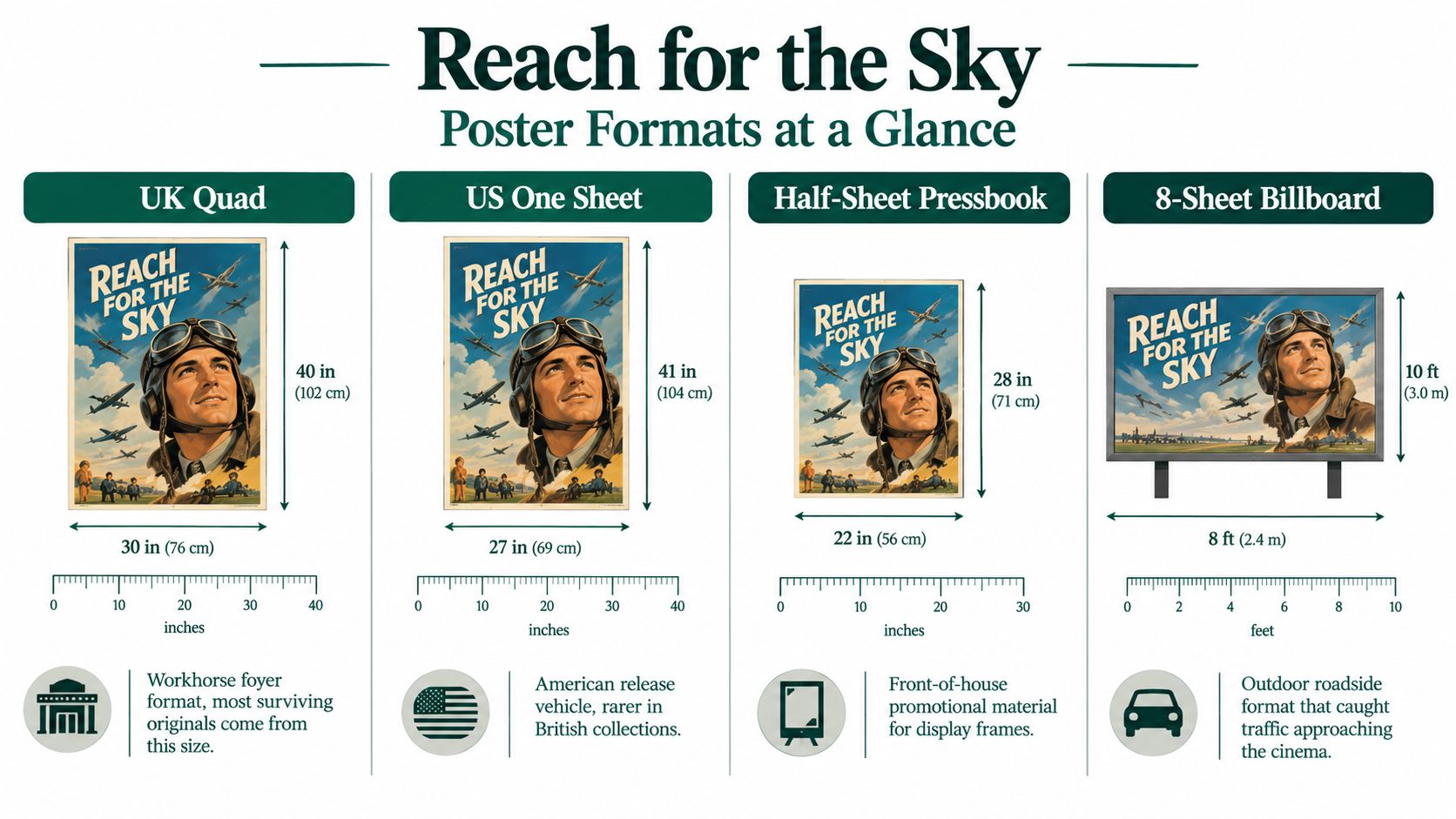
The British Quad measures 30 by 40 inches, approximately 76.2 by 101.6 centimetres, according to UK movie-poster size guidance. It's the workhorse British cinema format and usually oriented horizontally in post-war examples. For a Reach for the Sky collector, that makes the Quad the most natural first purchase.
The US One Sheet measures 27 by 41 inches. It's a portrait format, made for American distribution, and it can be less convenient in a room designed around British horizontal Quads. The artwork may be related, but the sheet isn't interchangeable with the British release just because the title is the same.
| Format | Dimensions (inches) | Display Role |
|---|---|---|
| UK Quad | 30 x 40 | Main foyer and cinema display format |
| US One Sheet | 27 x 41 | American release and portrait display |
| Half-Sheet Pressbook | Roughly 22 x 28 | Front-of-house promotional material |
| 8-Sheet Billboard | Roughly 8 x 10 feet | Outdoor roadside advertising |
What the formats did in a working cinema
The Quad sold the film from the foyer wall. Its wide composition had to catch attention quickly while giving the title and central image enough room to work at a distance.
Lobby cards and other front-of-house pieces filled display frames with scenes or supporting images. They were smaller and easier to arrange as a set, but they don't offer the same single-sheet impact. A half-sheet pressbook item belongs to that promotional environment rather than replacing the main Quad.
The 8-sheet billboard was an outdoor format. At roughly 8 by 10 feet, it was meant to be noticed by people approaching the cinema, not examined at arm's length in a collector's study. Its size creates major storage and framing complications.
A Mini Quad, measuring 12 by 16 inches, and a Double Quad, measuring 40 by 60 inches, are also recognised British categories, as outlined in British poster format guidance. Knowing those names prevents you from treating every British sheet as a standard Quad.
For a straightforward home display, the UK Quad usually offers the best balance of historical relevance, visual presence and manageable framing. A One Sheet can be the right choice if you specifically collect American material, but don't buy it accidentally because the photograph looked similar. This guide to the difference between a One Sheet and a Quad is useful before you compare listings.
Spotting an Original Reach for the Sky Poster
Read the physical evidence
Start with the paper. A genuine 1956 British Quad should feel consistent with period UK cinema printing, often with a heavier, slightly off-white machine-finish surface rather than the bright, glossy stock associated with many modern reproductions. Paper alone doesn't prove authenticity, but paper that feels freshly manufactured should make you pause.
Next, inspect the lower edge. Printer credits, distributor information and certification details can help place the sheet in the British release system. Look for the J. Arthur Rank distribution line, the relevant British printer information and the British Board of Film Censors certificate number. On Quads, you shouldn't automatically expect the same NSS-style numbering seen on American One Sheets.
The absence of a familiar US number isn't evidence that a Quad is fake. It reflects the fact that British and American distribution systems marked their paper differently. Compare the whole group of clues rather than searching for one magic code.
Check artwork and seller photographs
Artwork variations can matter. The Kenneth Rive portrait style associated with period material may differ from later painted versions, so compare the face, typography, colour balance and composition against reliable examples. An image that looks too sharp, too saturated or strangely modern deserves further investigation.
A seller should be able to provide reverse scans or photographs. The back can reveal paper texture, old tape, writing, stamps, lining, repairs and evidence of age that a front image conceals.
Use this practical inspection sequence before making an offer:
- Confirm the format: Ask whether the sheet is a UK Quad, US One Sheet or another British format.
- Inspect the edges: Request photographs of chips, tears, trimmed areas and missing paper.
- Study the folds: Check whether the fold pattern fits the stated format and whether folds have been flattened or repaired.
- Read the bottom margin: Look for printer, distributor and certification details without assuming every mark must match an American example.
- Request the reverse: Refusal to show the back is a serious reason to slow down.
- Compare the artwork: Look for period-appropriate typography, portrait treatment and colour rather than relying on the title alone.
The UK original movie-poster guide can help you understand the broader differences between original British paper and later reproductions. The central rule is simple: don't pay for certainty that the seller hasn't demonstrated.
Grading the Condition Honestly
A dealer's grade is shorthand, not a substitute for photographs. On a 1956 Quad, folded paper can show cross-fold wear, small tears, pinholes near the corners, edge chipping and surface marks from repeated handling. A One Sheet may show a different fold pattern, but the same principle applies. The worst defect matters more than the brightest colour.
Near Mint should mean exceptionally clean, with minimal handling evidence. Very Fine may show light fold wear or small flaws that don't interrupt the image. Fine can have more visible fold stress and minor edge issues, while still presenting well. Very Good usually means noticeable wear, pinholes, small tears or marks that remain acceptable for display. Good and Fair describe increasingly obvious damage, paper loss, staining or heavy restoration.
| Grade | Typical Defects | Price Impact |
|---|---|---|
| Near Mint | Very little visible handling or fold wear | Commands the strongest price |
| Very Fine | Light wear, minor folds or small edge flaws | Strong value when colours remain clear |
| Fine | Visible fold wear, modest marks or small repairs | Balanced choice for many collectors |
| Very Good | Noticeable pinholes, edge wear, tears or toning | Lower price, often suitable for framing |
| Good | More extensive defects, staining or restoration | Bought for subject and display rather than perfection |
| Fair | Major damage, paper loss or heavy repair | Cheapest entry, but limited condition appeal |
Look past colour alone
A bright poster with a torn corner isn't Fine because the central portrait photographs well. Conversely, a slightly toned Quad can still be desirable if the paper is crisp, the folds are stable and the artwork remains complete. Yellowing may result from acidic backing or storage materials, so ask whether the sheet has been mounted before.
Restoration occupies a legitimate but sensitive place in the market. Linen backing, light colour touch-up and backing repair can stabilise a damaged sheet and make it easier to display, but they don't turn it into an untouched example. Serious dealers disclose conservation work and should distinguish repair from original condition.
Practical grading rule: Grade by the worst meaningful defect, then decide whether the improvement in appearance justifies the restoration or framing cost.
Think about the finished display, not just the purchase price. A lower-grade poster may require more conservation and a more complex mount, while a slightly better example may need less intervention. That doesn't make the higher grade automatically better, but it does make total cost and originality worth comparing together.
Framing and Storing Your Poster for the Long Term
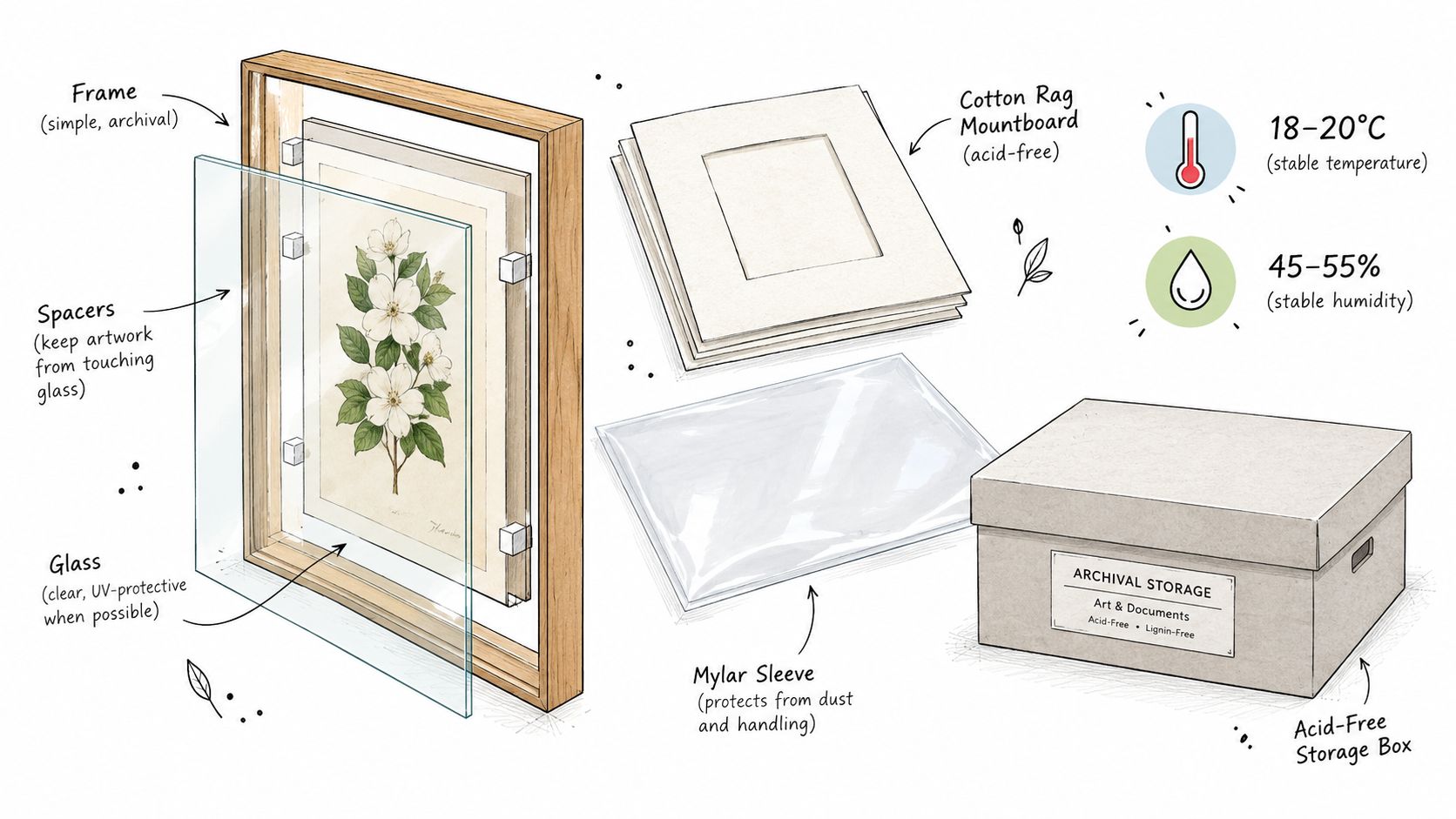
A poorly chosen frame can damage a good Quad faster than an unfashionable one ever will. For unframed storage, keep single-sheet paper items flat in acid-free folders, envelopes or boxes. Polyester sleeves suit clean, stable sheets that are handled regularly, as set out in Icon's guidance for documents and archives.
For a framed Quad, place a conservation-grade barrier between the poster and every frame material. A 100% cotton rag mountboard, an inert polyester sleeve where suitable, and UV-filtering glass or acrylic form a sensible domestic setup. Spacers keep the paper away from the glazing. A window mount can cover vulnerable fold edges without pressing on them.
Materials that help and materials that fail
Avoid dry-mounting, sellotape and ordinary cardboard backing. Adhesives may become impossible to remove, acidic board can stain the sheet, and pressure can flatten folds while creating fresh stress around them. If a poster has already been mounted, ask what was used before agreeing to further work.
Archival enclosures use calcium carbonate buffered paper and board with a pH of 6 to 9, together with lignin-free and sulphur-free materials, as explained in storage enclosure guidance from the Archives and Records Association. Polyester film is chemically inert, but static can be a problem. Use it for suitable, flat, single items, not for friable or badly damaged paper.
Keep the poster in a clean, dry, cool and dark room, with relative humidity around 45 to 60%. Stable household conditions matter more than chasing an exact reading. Avoid lofts, garages, damp basements and walls exposed to strong sunlight. British collection-care practice also stresses limiting swings in temperature and moisture, rather than relying on a single good reading.
A workable home routine
For unframed storage, use an acid-free portfolio, suitable flat file or purpose-made enclosure. Support the sheet fully and avoid unfolding it repeatedly for visitors. The same principle applies to smaller collectables: a PSA graded card display should protect the item while keeping handling to a minimum.
Inspect the back of a framed poster occasionally for foxing, new staining, condensation or movement. If anything changes, remove the frame from the environmental cause, record the condition and consult a paper conservator before attempting a home repair.
For practical advice on spacers, glazing and backing, follow this guide to framing a poster. The frame should protect the paper and leave the artwork visually dominant, without trapping it against unsuitable materials.
Buying and Sourcing with Confidence
Approach every listing with a short checklist. You need a confirmed format, period-appropriate paper, a credible ownership story where available and high-resolution photographs of the front, edges, folds and reverse. If any one of those is missing, the price should reflect uncertainty.
A shortlist might include established UK specialists such as Love Film Movie Posters and Theatre Poster Bookshop, along with auction material from houses such as Onslows and occasional lots from Eastbourne or Warwick and Trent. Cross-reference comparable sales on Terapeak or dedicated poster price guides, but compare like with like. A UK Quad in Fine condition isn't a useful benchmark for a restored US One Sheet.
Red flags that deserve a hard pause
- No additional photographs: A seller who won't show corners or the reverse is asking you to buy blind.
- Repeated stock imagery: Identical photographs across several listings can conceal the actual item.
- Modern-looking paper: Glossy stock, unnaturally bright colour and a perfect digital surface often indicate a reproduction or later print.
- Suspicious folds: A sheet described as original with unusually clean cross-folds after linen backing may have been extensively restored.
- Centre-only framing photographs: They hide the defects that determine condition.
- Unclear restoration: Colour touch-up, backing repair and trimming should be stated plainly.
- An implausibly low price: A bargain isn't proof of fraud, but it should trigger stronger checks rather than excitement.
Ask about prior ownership, theatre history and conservation. You don't need a romantic provenance story for every poster, but you do need honest answers about what the dealer knows and what remains unknown.
Packaging is part of the purchase
A reputable seller should ship a larger rolled poster in a tube, not fold it for convenience. Independent packaging guidance says rolled items larger than roughly 11 by 17 inches are usually sent in a tube to reduce bending, creasing and transit damage, as described in poster shipping guidance.
The poster should be protected with glassine or another suitable barrier, supported inside a wide-diameter tube and sent with tracked, insured postage. Confirm the returns policy before payment, particularly when photographs don't show every defect.
Buy in person or by phone when possible, especially at auction. Use Buy It Now as a fallback only after you've priced comparable sales for that exact format and condition. The disciplined collector isn't trying to win every listing. They're trying to buy the right piece with no unpleasant surprise after delivery.
Famous Movie Posters offers guaranteed original UK Quads, US One Sheets and other cinema formats, with authenticity checks, archival storage and purpose-designed protective packaging. Browse the Famous Movie Posters catalogue for original film paper, framing options and hard-to-find titles, or use its Request a Poster service if the right Reach for the Sky example isn't currently listed.